
Salads
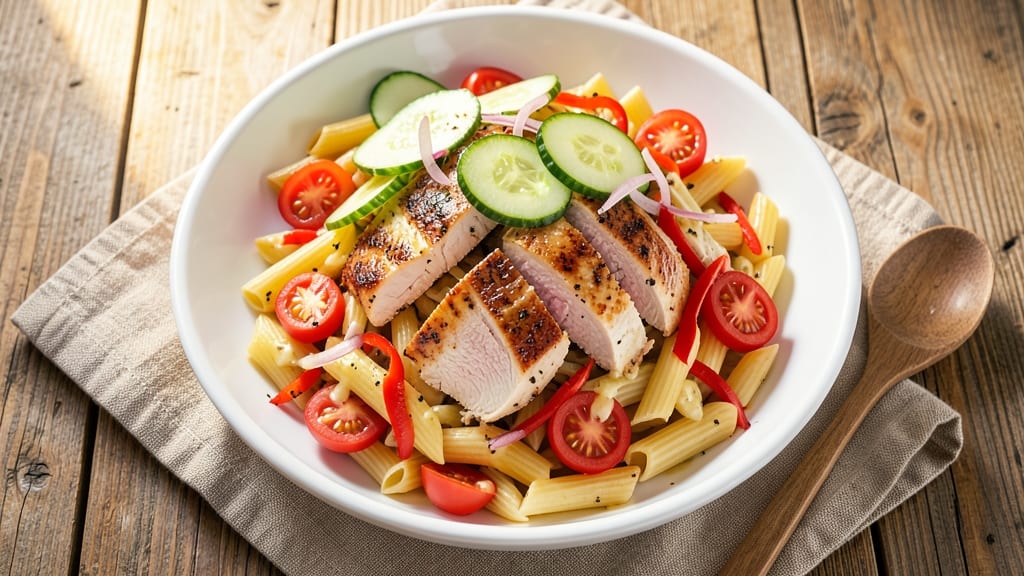
This protein-packed chicken and vegetable pasta salad delivers picnic-worthy flavor without the mayo cling. After perfecting this recipe for summer potlucks—where humidity turns salads soggy—I developed a method that keeps ingredients crisp and vibrant for hours.
The secret? A light vinaigrette that clings without weighing down the pasta, and chicken cooked just until tender, not rubbery.
What makes this salad stand out is the balance: grilled herb-marinated chicken adds protein and smoky depth, while crunchy vegetables (bell peppers, cucumbers, cherry tomatoes) bring freshness. I use short pasta shapes like fusilli or penne—their nooks trap dressing and vegetables perfectly, eliminating the need for heavy mayo.
The result? A dish that holds up beautifully in the heat and tastes even better the next day.
By the time you're done assembling, you'll have a salad that's restaurant-quality but built for picnics, office lunches, or meal prep. The chicken stays juicy, the vegetables retain their crunch, and the dressing enhances rather than overpowers.
No soggy pasta, no wilted greens—just a perfect balance of textures and flavors that keeps everyone asking for seconds.
This recipe scales effortlessly for crowds, and the components can be prepped ahead—just toss everything together before serving. Whether you're packing for a beach day or feeding a hungry family, this pasta salad delivers zero compromise on taste or texture. Let's get started with the foolproof method.
Ingredients for chicken and vegetable pasta salad
Sixteen ingredients for a picnic salad that stays crisp and vibrant for hours.
| Ingredient | Amount | Notes |
|---|---|---|
| Boneless, Skinless Chicken Breast 🍗 | 2 ½ lb | Pounded to even thickness |
| Short Pasta (Fusilli or Penne) 🍝 | 1 ½ cups | Uncooked, dry pasta |
| Red Bell Pepper 🍅 | 1 whole | Diced, seeds removed |
| English Cucumber 🥒 | 1 whole | Diced, peeled if preferred |
| Cherry Tomatoes 🍅 | 1 ½ cups | Halved, seeds removed |
| Red Onion 🧅 | 1 whole | Finely diced |
| Fresh Parsley 🌿 | ⅓ cup | Chopped, stems removed |
| Extra-Virgin Olive Oil 🫒 | ½ cup | For cooking chicken |
| Dry White Wine 🍷 | ¼ cup | For marinade |
| Fresh Lemon Juice 🍋 | ¼ cup | Freshly squeezed |
| Dijon Mustard 🍯 | 1 tbsp | For vinaigrette |
| Honey 🍯 | 1 tbsp | For vinaigrette balance |
| Garlic Cloves 🧄 | 4 cloves | Minced for marinade |
| Kosher Salt 🧂 | 1 ½ tsp | Diamond Crystal preferred |
| Freshly Ground Black Pepper 🌶️ | 1 tsp | For seasoning |
The chicken is the foundation, so quality matters. Buy boneless, skinless breasts with good marbling—Costco or Whole Foods carry excellent cuts. Pound them to even thickness for consistent cooking. For the vegetables, farmers markets deliver the freshest produce, but grocery store bell peppers and cucumbers work fine if they're firm and vibrant. Cherry tomatoes should be plump and bright red—avoid any with soft spots. Fresh herbs like parsley add brightness, so buy them in small bunches and use within 3 days for peak flavor. The pasta? Barilla or De Cecco are my go-tos—they hold up well to the dressing without getting mushy.
No white wine? Substitute chicken broth with a splash of apple cider vinegar for the marinade. Fresh parsley unavailable? Dried parsley at one-third the amount works in a pinch, though fresh is superior. For the vinaigrette, olive oil and Dijon mustard are non-negotiable—they create the perfect balance of richness and tang. The honey adds just enough sweetness to complement the acidity without overpowering. If you prefer a sharper flavor, increase the lemon juice by 1 tablespoon. For the vegetables, zucchini or avocado can replace cucumber if you're feeling adventurous, but stick to the classic combo for the best texture contrast.
Prep the chicken and vegetables ahead—store them separately in airtight containers for up to 3 days in the fridge. The vinaigrette can be made 2 days in advance, but add the honey just before tossing to prevent it from turning the dressing cloudy. This salad tastes even better the next day as the flavors meld. For meal prep, portion into glass containers with tight lids—they keep everything crisp for 4 days. The pasta will absorb the dressing over time, so add a splash of water or lemon juice when reheating to restore moisture.
Why You'll Love This Recipe
- I swear by this trick: boil the pasta, cool it, and toss it with the chicken after it’s cooked. No soggy veggies, no last-minute scrambling—just chop the bell pepper, slice the cucumber, and halve those cherry tomatoes while the chicken rests. Honestly, it’s the kind of recipe where you can have a glass of wine while it assembles itself.
- No-Cook Prep Magic: I swear by this trick: boil the pasta, cool it, and toss it with the chicken after it’s cooked. No soggy veggies, no last-minute scrambling—just chop the bell pepper, slice the cucumber, and halve those cherry tomatoes while the chicken rests. Honestly, it’s the kind of recipe where you can have a glass of wine while it assembles itself.
- Crunchy-Tender Balance: The secret? Toss the pasta with the cucumber and bell pepper right before adding the chicken. That crispness from the raw veggies cuts through the juicy, slightly charred chicken so perfectly—like a fresh bite of summer in every forkful. (Yes, even on a Tuesday night.)
- Lunchbox Hero: Between us, this is my go-to for meal prep. Pack it in jars or containers, and it stays fresh for days—no sad, wilted salads here. My kids actually ask for it in their lunches, and my husband eats his portion first. That’s the mark of a winner.
Step-by-step instructions for chicken and vegetable pasta salad
Master this protein-packed salad with a bright, balanced dressing that clings perfectly to every ingredient.
Marinate and Cook the Chicken Breast
In a bowl, combine the 0.25 cup dry white wine, 0.25 cup fresh lemon juice, 1 tbsp Dijon mustard, 1 tbsp honey, 4 minced garlic cloves, 1.5 tsp kosher salt, and 1 tsp freshly ground black pepper. Whisk until fully emulsified. Add the 2.5 lb boneless, skinless chicken breast, ensuring each piece is thoroughly coated. Let marinate for at least 30 minutes in the refrigerator.
Heat 0.25 cup extra-virgin olive oil in a large skillet over medium-high heat. Remove the chicken from the marinade (reserve the marinade) and pat dry with paper towels. Cook the chicken for 5-6 minutes per side until the internal temperature reaches 165°F and the exterior develops a golden-brown crust. Transfer to a cutting board and let rest for 10 minutes before slicing into ½-inch thick strips. The resting period ensures juicy, tender chicken that won't dry out when mixed with the vegetables.
Prepare the Vegetable Medley
While the chicken rests, dice the 1 whole red bell pepper into ¼-inch pieces, removing seeds and membranes. Peel and dice the 1 whole English cucumber into ½-inch cubes (peeling is optional but removes bitterness). Halve the 1.5 cups cherry tomatoes, removing seeds, and finely dice the 1 whole red onion. Chop the 0.33 cup fresh parsley, removing stems, into small pieces.
In a large mixing bowl, combine all prepared vegetables. Add the sliced chicken strips and toss gently to distribute evenly. The vegetables should be at room temperature to prevent the salad from becoming watery when the dressing is added later. This step ensures every bite contains a perfect balance of protein, crunch, and freshness.
Cook the Pasta Al Dente
Bring a large pot of salted water to a rolling boil. Add the 1.5 cups short pasta (fusilli or penne) and cook according to package instructions until al dente—1-2 minutes less than suggested. Drain immediately and rinse under cold water for 10 seconds to stop cooking and remove excess starch. This prevents the pasta from becoming mushy when combined with the dressing.
Transfer the drained pasta to the mixing bowl with the chicken and vegetables. Toss gently to combine, ensuring the pasta absorbs the flavors of the chicken and vegetables. The pasta should be evenly distributed, with no dry spots. This is the foundation of the salad, so take your time to ensure everything is well integrated.
Prepare and Combine the Dressing
In a small bowl, whisk together the reserved chicken marinade with the remaining 0.25 cup extra-virgin olive oil. The dressing should be smooth and well-emulsified, with a balance of tangy, sweet, and savory notes. Taste and adjust seasoning if needed—add a pinch more salt or a splash of lemon juice for brightness.
Drizzle the dressing over the pasta salad and toss gently but thoroughly. The salad should be evenly coated, with the dressing clinging to each strand of pasta and piece of vegetable. Avoid overmixing, as this can break the pasta. Let the salad sit for 5 minutes before serving to allow the flavors to meld. This step is critical for achieving the perfect balance of texture and taste.
Chill and Serve
Transfer the pasta salad to an airtight container and refrigerate for at least 1 hour before serving. Chilling allows the flavors to deepen and the dressing to fully absorb into the ingredients. This is especially important for picnics or meals prepared ahead of time, as it ensures the salad stays fresh and flavorful.
When ready to serve, give the salad a final toss and adjust seasoning if needed. Garnish with additional chopped parsley for a pop of color and freshness. Serve immediately or pack for a picnic, where it will hold up beautifully for 4-6 hours without becoming soggy. The result is a protein-packed, vibrant salad that delivers on every promise of picnic perfection.
Pro Tips For Making Chicken And Vegetable Pasta Salad
- USE A MEAT THERMOMETER: I learned this the hard way—chicken breast looks done at 165°F (74°C) internally, not when it’s just turning opaque. White meat can stay pink even when fully cooked, so don’t eyeball it. A quick-read thermometer takes 2 seconds and saves you from dry, overcooked chicken in your salad.
- CUT CUCUMBERS LENGTHWISE: Slicing English cucumbers into thick half-moons instead of rounds keeps them from turning into a watery mess in the salad. The skin stays intact longer, and the texture holds up better when tossed with dressing. Skip the peeling—it’s unnecessary and makes them look sad.
- COOK PASTA AL DENTE THEN CHILL: Pasta finishes cooking in the fridge while you assemble the salad, and al dente is non-negotiable here. Toss hot pasta with a splash of cold water or ice bath right after draining, then refrigerate for 30 minutes before mixing. This prevents mush and lets flavors meld better—trust me, it’s the difference between a sad and a stellar salad.
- SALT THE CHICKEN AFTER SEARING: Seasoning chicken breast before cooking is a one-way ticket to dryness, but salting it after a quick sear (even just 1–2 minutes per side) locks in moisture. Let it rest 5 minutes under foil before slicing—this keeps the slices tender and juicy, not rubbery, when mixed into the salad. Yes, it’s an extra step, but your salad will thank you.
Essential equipment for great chicken and vegetable pasta salad
Must-Have Mixing Tools
For this salad, a large stainless steel mixing bowl (like the OXO Good Grips 8-quart) is my go-to—it’s deep enough to handle all ingredients without spills and resists staining from acidic dressings. I also keep a medium bowl (about 5-quart capacity) for prepping the dressing separately.
A sharp chef’s knife (I love the Victorinox 8-inch) and cutting board (my John Boos bamboo never slips) are essential for chopping vegetables with precision. 🌿
Precision Cooking Gear
Cooking the chicken requires a heavy-bottomed skillet—I use my All-Clad Stainless Steel 10-inch—to maintain even heat distribution. A meat thermometer (the ThermoWorks Smoke is my favorite) ensures the chicken hits 165°F without overcooking.
For the pasta, a colander with long handles (like the OXO Good Grips) makes draining and rinsing effortless. Trust me, these tools make all the difference in texture and don’t break the bank.
Storage and Serving Essentials
An airtight glass container (I prefer Le Creuset 3-quart) keeps the salad fresh for days—glass won’t absorb odors or flavors like plastic. For picnics, I pack individual portions in mason jars (the Ball Wide-Mouth 16-ounce) with the dressing at the bottom and ingredients layered on top.
A salad spinner (like the OXO Good Grips) is a game-changer for drying greens or rinsing pasta quickly. These tools ensure your salad stays crisp and vibrant, no matter where you take it.
Budget-Friendly Swaps
No fancy tools? No problem. A large ceramic bowl works for mixing, and a sharp paring knife can handle most chopping tasks. For cooking, a cast-iron skillet (even a vintage one) distributes heat well.
A digital instant-read thermometer (like the Thermoworks Spot) is cheaper than a dedicated meat thermometer and just as accurate. The key is keeping everything clean and sharp—even basic tools can deliver professional results with the right technique. 💪
Pro Tips for Efficiency
I prep all vegetables in one go using a mandoline slicer (the Benriner 4-in-1) for even cuts, but a sharp knife works too. For the pasta, I use a timer (my phone works!) to avoid overcooking.
A small whisk (like the OXO Good Grips) ensures the dressing emulsifies smoothly. These little upgrades save time and frustration—trust me, they’re worth the investment for repeat meals.
Nutrition facts
Frequently asked questions
Can I use rotisserie chicken instead of fresh?
Rotisserie chicken is a fantastic shortcut that still delivers great flavor. Just shred or slice 2 cups of cooked chicken (about 1 lb) and use it in place of the fresh chicken breast. The skin adds richness, but remove any excess fat to keep the salad light. Season with an extra pinch of salt and a squeeze of lemon juice to brighten the flavors.
How do I keep the pasta from getting mushy?
The secret is cooking it al dente and rinsing immediately. Cook the pasta 1-2 minutes less than package instructions, then drain and rinse under cold water for 10 seconds to stop cooking. This removes excess starch that makes pasta sticky. For extra insurance, toss the drained pasta with 1 teaspoon olive oil before adding to the salad.
What's the best way to store leftovers?
Store in an airtight glass container for up to 4 days in the fridge. The glass keeps flavors fresh, and the tight seal prevents drying. For picnics, portion into individual containers with lids—this maintains crispness. If the salad seems dry after refrigeration, sprinkle with 1 tablespoon cold water or lemon juice and toss gently before serving.
Can I make this salad ahead of time?
Yes! This salad actually tastes better after chilling. Prep all components separately (cooked chicken, vegetables, pasta, dressing) and store in the fridge for up to 3 days. When ready to serve, toss everything together and let sit for 15 minutes to allow flavors to meld. The acidity in the dressing will help preserve freshness longer than mayo-based salads.
What vegetables can I substitute?
For variety, try zucchini (diced), avocado (add just before serving), or corn kernels for sweetness. If you dislike red onion, swap for green onions or shallots. For extra crunch, add ¼ cup chopped celery or ¼ cup toasted nuts. Just keep the total vegetable volume similar to maintain the salad's balance.