
Salads
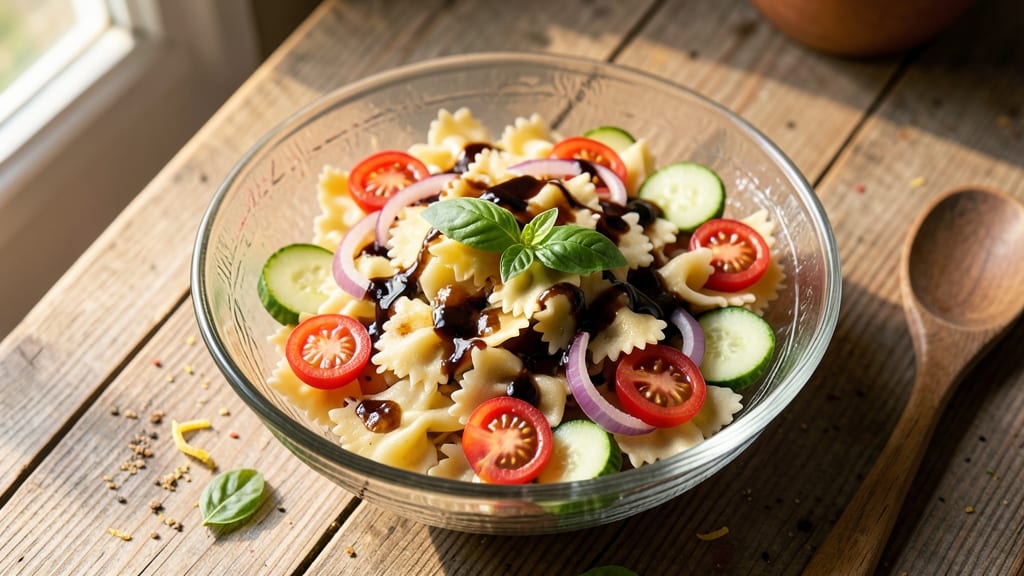
This cold pasta salad recipe with balsamic vinegar transforms simple ingredients into a vibrant, restaurant-worthy dish that’s ready in just 20 minutes. The secret lies in a rich, tangy balsamic glaze that caramelizes into a glossy finish, elevating every bite with depth and complexity.
Perfect for picnics, potlucks, or meal prep, this salad keeps its freshness—and flavor—even after hours in the fridge.
The beauty of this recipe is its versatility: swap in grilled chicken, fresh herbs, or roasted vegetables to customize it for any occasion. The balsamic dressing isn’t just a topping—it’s the star, balancing sweetness and acidity while clinging to each al dente pasta strand.
No fancy techniques required; just cook, chill, and toss for a dish that’s as effortless as it is impressive.
What you’ll end up with is a salad that’s bright, satisfying, and packed with texture—crisp vegetables, tender pasta, and a glossy balsamic glaze that ties it all together. The flavors deepen as it chills, making it even more delicious hours later.
Ideal for summer gatherings or weeknight dinners, this recipe proves cold pasta salads can be anything but boring.
Ready to elevate your next meal? This dish delivers restaurant-quality results with minimal effort, and the best part? It tastes even better the next day. Let’s get started!
Ingredients for cold pasta salad recipe with balsamic vinegar
Twelve simple ingredients transform into a restaurant-worthy balsamic-glazed pasta salad perfect for any occasion.
| Ingredient | Amount | Notes |
|---|---|---|
| Short Pasta (e.g., Farfalle or Penne) 🍝 | 12 oz | Al dente cooked, cooled |
| Cherry Tomatoes | 1 pint | Halved, seeds removed |
| Red Bell Pepper 🌶️ | 1 whole | Diced, seeds removed |
| Red Onion 🧅 | 1 whole | Thinly sliced, soaked 5 mins |
| Cucumber 🥒 | 1 whole | English or Persian, diced |
| Balsamic Vinegar 🍷 | ½ cup | Aged 10+ years preferred |
| Extra-Virgin Olive Oil 🫒 | ¼ cup | Light fruity variety |
| Honey 🍯 | 1 tbsp | Wildflower preferred |
| Dijon Mustard 🍯 | 1 tsp | For depth of flavor |
| Fresh Basil Leaves 🌿 | ¼ cup | Chopped, stems removed |
| Salt 🧂 | 1 ½ tsp | Diamond Crystal preferred |
| Black Pepper 🌶️ | ½ tsp | Freshly cracked |
| Parmesan Cheese 🧀 | ¼ cup | Freshly grated, aged |
The balsamic vinegar is non-negotiable here—aged 10+ years from Italian specialty stores delivers that deep, caramelized complexity. Trader Joe's carries a great option, but if you're splurging, Eataly or Whole Foods bulk bins have exceptional choices. The pasta must be al dente; undercooked strands turn mushy when chilled. For the vegetables, heirloom cherry tomatoes and Persian cucumbers add vibrant color, but regular grocery store varieties work fine. Fresh basil is ideal, but dried oregano at one-third the amount works in a pinch if you're short on time.
No aged balsamic? Balsamic glaze mixed with 1 tbsp red wine vinegar mimics the depth. Short on honey? Maple syrup works at a 1:1 ratio, though it lacks the floral notes. The Dijon mustard is essential for that subtle tang—skip it and the dressing will taste flat. For the cheese, Pecorino Romano adds a sharper bite than Parmesan. If you're making this ahead, store the dressing separately until tossing to prevent soggy pasta. The vegetables can be prepped hours in advance and kept in airtight containers in the fridge.
This salad tastes even better the next day—flavors meld beautifully when chilled. Store the base (pasta and vegetables) in one container and the dressing separately. When ready to serve, toss everything together with a splash of fresh lemon juice to brighten the flavors. Keeps for 4-5 days in the fridge, though the texture may soften after day three. For meal prep, portion into individual containers with a small dressing packet on the side—just shake to combine before eating. The balsamic glaze can be made up to 1 week ahead and stored in the fridge.
Why You'll Love This Recipe
- I swear by this trick: boil the pasta, rinse it under cold water, and toss it straight into the fridge. No waiting, no fuss—just dump the veggies and dressing later. (Honestly, I’ve done it while watching a movie.)
- No-Cook Prep: I swear by this trick: boil the pasta, rinse it under cold water, and toss it straight into the fridge. No waiting, no fuss—just dump the veggies and dressing later. (Honestly, I’ve done it while watching a movie.)
- Sweet-Sour Magic: That balsamic glaze? It’s the secret weapon. The tang cuts through the creamy cucumber and sweet cherry tomatoes, while the red onion adds a sharp kick. Between us, it’s the kind of balance that makes you go back for seconds.
- Potluck Hero: Bring this to a summer BBQ and watch it disappear. It’s hearty enough for a main but light enough for a side, and the colors? Stunning. My cousin always asks for the recipe—now I finally have one to share.
Step-by-step instructions for balsamic-glazed al dente pasta salad
Here's how to craft a vibrant, restaurant-worthy cold pasta salad with a signature balsamic glaze.
Cook the Pasta to Perfect Al Dente
Bring a large pot of water to a rolling boil and add 1.5 teaspoons of the salt. Add the 12 oz short pasta and cook until 1 minute shy of package instructions for al dente. This ensures the pasta finishes cooking in the dressing without becoming mushy.
Drain immediately and rinse under cold water for 30 seconds to stop the cooking process. Toss the pasta with 1 tablespoon of the olive oil to prevent sticking. Let it cool completely on a rimmed baking sheet before assembling the salad—this prevents a watery dressing later.
Prepare the Vegetable Components
While the pasta cooks, halve the 1 pint cherry tomatoes and remove seeds. Dice the 1 whole red bell pepper and seeds, then thinly slice the 1 whole red onion and soak in ice water for 5 minutes to mellow the sharpness. Dice the 1 whole cucumber into ½-inch pieces and chop the ¼ cup fresh basil leaves, removing stems.
Drain the onion thoroughly and combine all prepared vegetables in a large mixing bowl. Sprinkle with ½ teaspoon of the salt and ¼ teaspoon of the black pepper. Toss gently to distribute seasoning evenly—this ensures balanced flavor throughout the salad.
Create the Signature Balsamic Dressing
In a small bowl, whisk together the ½ cup aged balsamic vinegar, ¼ cup extra-virgin olive oil, 1 tablespoon honey, and 1 teaspoon Dijon mustard. The honey and mustard create a perfect balance between sweet and tangy notes that complement the vinegar's acidity.
Simmer the dressing in a small saucepan over medium-low heat for 8-10 minutes until reduced by half and slightly thickened. You'll notice the color deepening to a rich amber hue—this indicates proper reduction. Let it cool completely before using.
Assemble and Marinate the Salad
Add the cooled pasta to the vegetable mixture and toss gently to combine. In a separate small bowl, whisk the cooled balsamic dressing with the remaining ½ teaspoon salt and ¼ teaspoon black pepper. Pour the dressing over the pasta and toss thoroughly until every strand is coated.
Cover the bowl and refrigerate for at least 2 hours (or up to 24 hours) to allow flavors to meld. The longer it sits, the more vibrant the colors become and the better the dressing clings to the pasta. This resting period transforms a simple salad into a cohesive, flavorful dish.
Finish and Serve with Parmesan
Before serving, sprinkle the salad with ¼ cup freshly grated Parmesan cheese and toss gently to distribute evenly. The cheese adds a salty contrast that brightens the entire dish. Taste and adjust seasoning if needed—you may want to add a pinch more salt or a drizzle of the reserved dressing.
Serve chilled and watch as the balsamic glaze creates a beautiful marbling effect throughout the pasta. Each bite should deliver a perfect balance of sweet, tangy, and savory flavors with satisfying al dente texture. This salad keeps well for 3 days in the refrigerator, making it ideal for meal prep.
Pro Tips For Making Cold Pasta Salad Recipe With Balsamic Vinegar
- Rinse Pasta Cold: Drain your cooked pasta, then run it under cold water for 10 seconds to stop the cooking. I learned this the hard way—overcooked pasta turns mushy in the fridge, and nobody wants a sad, limp salad. Works especially well for short shapes like farfalle or penne.
- Dice Onion Thin: Slice that red onion paper-thin (almost translucent) instead of chunky. Thin slices caramelize better when tossed with balsamic later, adding sweetness without overwhelming the dish. Yes, it takes a few extra seconds, but it makes a real difference.
- Toss Tomatoes Last: Hold off on adding cherry tomatoes until the very end—right before serving. They bruise easily and release too much juice if mixed in early, turning your salad into a watery mess. Add them gently, and they’ll stay plump and vibrant.
- Dress Pasta First: Toss your pasta with half the balsamic dressing before refrigerating. The acid starts breaking down the starches immediately, making the salad creamier and more cohesive when you mix everything later. Skip this, and you’ll end up with dry, separate ingredients.
Essential equipment for perfect results
Essential Mixing Tools
Start with a large mixing bowl (at least 8-quart capacity) to comfortably hold all ingredients without overcrowding. I recommend a stainless steel bowl from OXO Good Grips—it’s durable, non-reactive, and easy to clean.
For tossing, use a pair of silicone spatulas or wooden salad tongs to gently combine ingredients without crushing delicate vegetables like cherry tomatoes or cucumbers. 🥗
Precision Measuring
Accurate measurements are key for the balsamic dressing. Invest in a small liquid measuring cup (like the Pyrex 1-cup version) for the ½ cup balsamic vinegar and ¼ cup olive oil.
For dry ingredients like salt and pepper, a set of stainless steel measuring spoons (such as Farberware’s 10-piece set) ensures consistency. The 1 teaspoon Dijon mustard and 1 tablespoon honey require precision—too much sweetness or tang will overpower the dish.
Heat Control for Dressing
Reduce the balsamic dressing on the stovetop using a small, heavy-bottomed saucepan (like All-Clad’s 1.5-quart version) to prevent scorching. A candy or deep-fry thermometer (such as Taylor Precision Products) helps monitor the temperature—aim for 200–210°F to achieve the perfect reduction without burning.
A wooden spoon works best for stirring while reducing. 🔥
Chilling Essentials
After assembling, refrigerate the salad in an airtight glass container (like Le Creuset’s stoneware bowls) to maintain freshness. For meal prep, use mason jars (such as Kerr’s wide-mouth 32-ounce jars)—layer the dressing at the bottom, then vegetables and pasta on top.
This keeps everything flavorful and crisp for up to 5 days. A thermometer probe (like Meater’s wireless model) ensures your fridge stays at 38–40°F for optimal storage.
Serving Presentation
Elevate your plating with a slate serving board (like West Elm’s marble slab) or a ceramic platter (such as Stone & Beam’s handcrafted pieces).
Use a small offset spatula to arrange the salad neatly, and a microplane (like Barbagiano’s stainless steel model) for freshly grating Parmesan cheese at the table. Garnish with whole basil leaves or toasted pine nuts for added texture and visual appeal. ✨
Nutrition facts
Frequently asked questions
Can I use any type of pasta for this recipe?
Short pasta like farfalle or penne works best because the shapes hold the balsamic dressing well. Avoid long strands like spaghetti—they can get tangled and make the salad messy. For extra texture, try fusilli or rigatoni, but cook them 1 minute less than package instructions to prevent overcooking.
How do I prevent the salad from getting soggy?
Keep the dressing separate until right before serving to maintain crisp vegetables. If making ahead, store the pasta and veggies in one container and the dressing in another. For extra insurance, pat vegetables dry with a paper towel before adding them to the salad. The 2-hour chilling time helps flavors meld without sacrificing texture.
What's the best way to make the balsamic dressing ahead?
Prepare the dressing up to 1 week ahead and store it in an airtight container in the fridge. The flavors deepen over time, becoming richer and more complex. When ready to use, gently reheat it in a small saucepan over low heat for 2-3 minutes to restore its glossy texture before tossing with the salad.
Can I add protein to this salad?
Grilled chicken breast, shrimp, or white beans work beautifully. For chicken, grill or bake until fully cooked, then slice into bite-sized pieces. Add protein just before serving to prevent it from absorbing too much moisture. If using beans, rinse them well to remove excess starch that can make the salad gummy.
Why does my balsamic dressing taste too sweet?
The honey adds natural sweetness, but if it's overpowering, reduce it to ½ tablespoon next time. Balance the flavor by adding ½ teaspoon more Dijon mustard—it adds tanginess that cuts through sweetness. For a more complex flavor, try adding ¼ teaspoon dried thyme or a pinch of red pepper flakes to the dressing.