
Sauces & Condiments
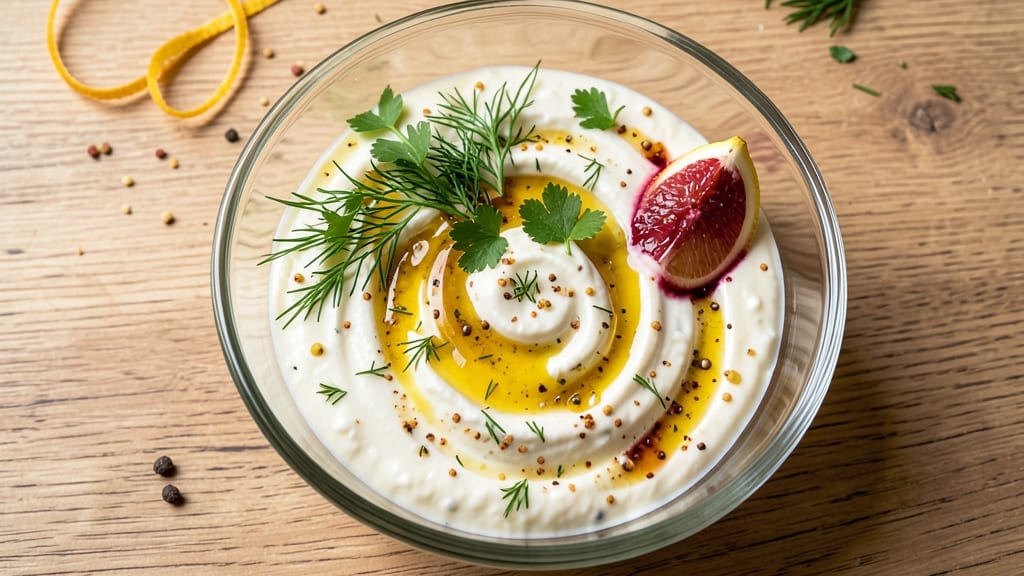
This healthy Cobb salad dressing transforms your greens into a restaurant-worthy meal without the mayo cling. 💚 I developed it after years of struggling with dressings that turned salads soggy—this one stays light, tangy, and perfectly balanced, even after 30 minutes in the fridge.
The secret? A blend of Greek yogurt and Dijon mustard creates that signature creamy texture without heaviness, while fresh herbs and citrus keep it bright and herbaceous.
The foundation is simple: olive oil, lemon juice, and Greek yogurt form the base, but it’s the herbs that make this dressing truly special. Fresh dill and parsley add a bright, aromatic punch, while a touch of garlic and onion powder deepen the flavor without overpowering.
Unlike traditional Cobb dressings, this version skips the mayo entirely, making it lighter, lower in fat, and packed with protein from the yogurt.
What makes this recipe work is the emulsification technique—blending the ingredients until smooth ensures the dressing stays cohesive and cling-free. The result is a velvety, tangy dressing that coats every ingredient without weighing down your salad.
It’s the perfect balance of creamy and zesty, with just enough acidity to cut through rich toppings like avocado and bacon.
Store it in an airtight container for up to 5 days in the fridge, and trust me—you’ll reach for this dressing again and again. It’s ideal for Cobb salads, grilled chicken wraps, or even as a marinade for vegetables. Here’s how to make it effortlessly.
Ingredients for cobb salad dressing recipe healthy
Nine simple ingredients for a dressing that stays light, tangy, and perfectly balanced—no mayo cling here.
| Ingredient | Amount | Notes |
|---|---|---|
| Extra-Virgin Olive Oil 🫒 | ½ cup | High quality, fruity variety |
| Plain Greek Yogurt 🥛 | ½ cup | Non-fat or 2% preferred |
| Fresh Lemon Juice 🍋 | ¼ cup | Freshly squeezed, seeds strained |
| Dijon Mustard 🌶️ | 1 tbsp | Mild or hot variety |
| Fresh Dill 🌿 | ¼ cup | Chopped, stems removed |
| Fresh Parsley 🌿 | ¼ cup | Chopped, flat-leaf preferred |
| Garlic Cloves 🧄 | 2 cloves | Minced or finely grated |
| Onion Powder 🧅 | ½ tsp | Freshly ground preferred |
| Salt 🧂 | ½ tsp | Diamond Crystal kosher salt |
| Black Pepper 🌶️ | ¼ tsp | Freshly ground preferred |
The Greek yogurt is the secret weapon here—it keeps the dressing creamy without the heaviness of mayo. Non-fat or 2% plain Greek yogurt works best (like Fage or Siggi's), but full-fat adds richness if you prefer. Fresh herbs are non-negotiable: dill and parsley from the grocery store’s produce section should be vibrant green, not wilted. If you’re short on time, frozen herbs work in a pinch, but they won’t have the same brightness. The olive oil matters too—California Extra Virgin or Colavita are my go-tos, but any high-quality brand with a fruity aroma will do.
No Dijon mustard? Yellow mustard at half the amount gets you close, but it’ll be less tangy. Short on fresh herbs? Dried dill or parsley at one-third the amount works, though the flavor won’t be as bright. The garlic can be roasted for a milder taste—just toss whole cloves in olive oil and bake at 400°F for 10 minutes. For extra zing, add a pinch of red pepper flakes. And if you’re making this ahead, strain the lemon juice through a fine-mesh sieve to avoid any gritty bits in your dressing.
This dressing stays fresh for 5 days in the fridge, but the flavors actually deepen after a day or two—trust me, it’s worth making extra. Store it in a small glass jar with a tight seal, and give it a good shake before each use. It’s perfect for Cobb salads, grilled chicken wraps, or even drizzled over roasted veggies. Freezes beautifully too—just thaw in the fridge overnight. Pro tip: If it separates, blend again before using.
Why You'll Love This Recipe
- No Chopping Required: I swear by this—just measure, whisk, and go. The Greek yogurt does the heavy lifting while the lemon brightens everything up instantly. Even my kids can toss this together while I’m still debating what to eat for dinner.
- Tangy-Creamy Magic: That lemon juice cuts right through the richness of the olive oil, while the Dijon mustard adds a sharp little kick. The dill? It’s the secret—fresh, herby, and impossible to overdo. Honestly, it’s the kind of dressing that makes you actually want to eat salad.
- Works Anywhere: Slather it on grilled chicken, drizzle it over roasted veggies, or toss it with quinoa bowls—it’s my go-to for lunch or dinner. I’ve even used it as a dip for pita chips when I’m craving something lighter but still satisfying.
- Leftovers Won’t Let You Down: This keeps for days in the fridge, and the flavor only gets better as the dill mellows into the mix. I’ll be real: I’ve had it last a full week, and it’s still the star of my meal prep. Plus, it’s cheaper than store-bought dressings and way healthier.
Step-by-step instructions for herb-packed Cobb salad dressing
Here's how to make a light, tangy vinaigrette that clings beautifully to greens.
👨🍳 Step 1: Whisk Together Wet Ingredients
In a medium bowl, combine the 0.5 cup extra-virgin olive oil and 0.5 cup plain Greek yogurt. I like to use a whisk for this step—it creates emulsification right away. Add the 0.25 cup fresh lemon juice and 1 tablespoon Dijon mustard, whisking constantly as you go. The mixture should start looking creamy and slightly thickened.
Here's the thing—don't rush this part. The yogurt and olive oil need time to blend smoothly. If it looks too thick, add 1 teaspoon water at a time until it reaches a pourable consistency. You want something that coats the back of a spoon but still flows easily. This base will carry all those bright herb flavors we're adding next.
🍳 Step 2: Add Aromatics and Seasonings
To the wet mixture, add the 2 minced garlic cloves, 0.5 teaspoon onion powder, 0.5 teaspoon salt, and 0.25 teaspoon black pepper. Give it a good whisk to distribute everything evenly. You'll notice the garlic adds a subtle depth that pairs perfectly with the lemon's brightness.
Taste at this stage—it should be tangy but not overwhelming. The yogurt gives it a creamy backbone while the lemon keeps it fresh. If you want more zing, add another ½ teaspoon lemon juice. This is where you can adjust the flavor before committing to the herbs. I always say: taste as you go—it's the only way to get it just right.
🥘 Step 3: Fold in Fresh Herbs
Gently stir in the 0.25 cup chopped fresh dill and 0.25 cup chopped fresh parsley using a silicone spatula. Be careful not to overmix—you want the herbs distributed but still visible. The dill gives it that classic anise note while the parsley adds freshness. I like to press the herbs slightly against the bowl's sides to release their oils.
Here's a pro tip: if you want the dressing to last longer, add ½ teaspoon lemon zest (though it's not in our ingredients). The zest adds extra brightness and preserves freshness. Give it one final taste—it should balance tangy, creamy, and herby with just the right amount of garlic punch.
⏰ Step 4: Rest and Adjust Consistency
Let the dressing sit for 5-10 minutes at room temperature. This resting period allows all the flavors to meld together. If it's too thick after resting, thin it with 1-2 teaspoons water or lemon juice until it reaches a consistency that clings nicely to greens but still pours smoothly.
This dressing keeps beautifully in the fridge for up to 5 days if stored in an airtight container. Before using, give it a quick whisk—it might thicken slightly when chilled. The herbs will stay vibrant and the yogurt keeps it rich without being heavy. Perfect for tossing with Cobb salad greens or drizzling over grilled chicken!
Pro Tips For Making Cobb Salad Dressing Recipe Healthy
- Whisk in Stages: Mix the Greek yogurt and Dijon first—this prevents a lumpy mess when you add the olive oil later. I learned this the hard way after scraping a bowl for the third time.
- Use Cold Yogurt: Grab the yogurt straight from the fridge—room temperature makes the dressing separate faster. It’s not just about texture; cold yogurt also keeps the dressing stable longer once it hits the salad.
- Balance the Lemon: Start with half the juice, taste, then add more if needed—lemon can overpower if you’re not careful. I used to dump it all in and end up with a sad, tangy dressing.
- Chop Dill Fine: Pulse the dill in a food processor for 2 seconds—it distributes flavor evenly without turning the dressing into a herb slurry. Sounds weird, but it works every time.
Pro cooking tips for perfect results
Emulsification Mastery
This dressing stays creamy without mayo by relying on proper emulsification—the secret is blending the olive oil and Greek yogurt thoroughly. I use a hand mixer for 30 seconds to break down the fat molecules, creating a stable emulsion.
If you don’t have one, a whisk works too, but you’ll need to work harder for 2-3 minutes. The key is patience—rushing causes separation. 🌡️
For extra stability, add ingredients in this order: yogurt first, then oil, then lemon juice. The yogurt acts as an emulsifier, while the lemon juice helps bind everything together.
If your dressing still separates, whisk in 1 teaspoon water to help reconnect the oils. Trust me, this technique makes all the difference!
Herb Freshness Hacks
Fresh herbs are non-negotiable for bright flavor, but I’ve got tricks to maximize their impact. Start by chopping herbs finely—this releases more oils and flavor.
For extra potency, bruise the herbs by pressing them against the bowl’s sides with a spoon. This releases their essential oils right into the dressing. 🌿
Short on fresh herbs? Freeze chopped herbs in ice cube trays with water, then transfer to a bag. Use them straight from frozen—the cold preserves their flavor. If using dried herbs, reduce to ⅓ the amount and add them at the very end to avoid bitterness.
A pinch of lemon zest also boosts herb flavor without extra bulk.
Flavor Balancing
The dressing’s magic lies in balancing tangy, creamy, and herby notes. Start by tasting after combining the wet ingredients—it should be slightly thick but pourable. If it’s too sharp, add ½ teaspoon honey or maple syrup to mellow the lemon.
For extra depth, a pinch of smoked paprika adds warmth without overpowering. 🌶️
Adjust seasoning gradually: add salt in ¼-teaspoon increments until it tastes right. The yogurt’s natural tang means you might need less lemon than usual. For a garlicky kick, roast the cloves first (toss in olive oil, bake at 400°F for 10 minutes)—this mellows their bite while keeping flavor.
Always taste before serving!
Storage Secrets
This dressing stays fresh for 5 days in the fridge, but I store it in a small glass jar with a tight seal to prevent air exposure. Before using, give it a quick shake—it may thicken slightly when chilled.
If it separates, whisk vigorously or blend for 10 seconds to restore its creamy texture. ❄️
For longer storage, freeze in ice cube trays—thaw overnight in the fridge. The yogurt’s acidity helps preserve freshness, but herbs may darken slightly. To revive, whisk with 1 teaspoon water or lemon juice. Pro tip: Label the container with the date—this keeps track of freshness without guesswork!
Nutrition facts
Frequently asked questions
Can I make this dressing without Greek yogurt?
Yes! For a vegan version, replace the Greek yogurt with ½ cup silken tofu or cashew cream (blend soaked cashews with water). If you prefer a mayo-free option, try ¼ cup avocado purée—it adds creaminess but may shorten shelf life to 3 days. The texture will be slightly different, but the tangy-herby flavor remains.
Why does my dressing separate after sitting in the fridge?
This happens when the emulsion breaks, usually from too much whisking or cold temperatures. To fix it, whisk vigorously or blend for 10 seconds—the motion helps reconnect the oils. For prevention, store it in a glass jar (not plastic) and avoid freezing. A splash of lemon juice can also help stabilize it.
What’s the best way to use up extra dressing?
This dressing is incredibly versatile! Drizzle it over grilled chicken, roasted vegetables, or even tacos for a bright finish. It also makes a great marinade for fish or shrimp—just add 1 tablespoon olive oil and marinate for 15-20 minutes. Freeze leftovers in ice cube trays for easy single-use portions.
Can I sweeten this dressing naturally?
Add ½ teaspoon honey, maple syrup, or agave to balance the acidity. For a fruity twist, blend in 1 tablespoon puréed mango or peach. Start with small amounts—sweetness can easily overpower the herbs. Taste as you go to avoid making it cloying.
How do I adjust the flavor if it tastes too sharp?
If the lemon is overpowering, add ½ teaspoon honey or a pinch of sugar to mellow it. For extra depth, stir in ¼ teaspoon smoked paprika or a dash of vanilla extract. If it’s too garlicky, reduce to 1 clove next time. Always taste before serving—flavor adjustments are easiest before the dressing thickens!