
Salads
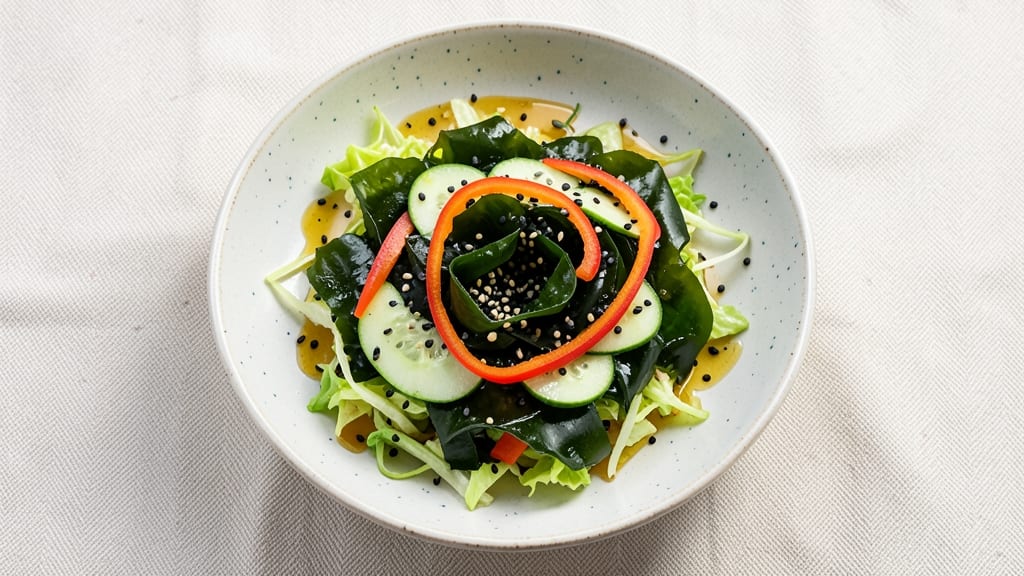
This Chuka Wakame Salad transforms simple ingredients into a vibrant, umami-rich dish that balances crisp textures with deep seaweed flavor. The secret lies in the traditional Japanese chuka dressing—a tangy, savory blend that elevates fresh vegetables and rehydrated wakame into a restaurant-worthy salad.
I developed this recipe after discovering how wakame’s briny sweetness pairs perfectly with the dressing’s umami depth, creating a dish that’s both elegant and satisfying.
The beauty of this salad is its simplicity: no cooking required beyond rehydrating the wakame, which adds a delicate oceanic crunch. The dressing, made with rice vinegar, soy sauce, and sesame oil, cuts through the salad’s freshness while enhancing every ingredient.
It’s a pescatarian-friendly dish that works as a light main or side, especially when paired with grilled fish or sushi.
What you’ll end up with is a visually stunning salad—bright green wakame strands, crisp vegetables, and a glossy dressing that ties everything together. The texture contrast alone makes it irresistible: tender cucumbers, crunchy cabbage, and the seaweed’s satisfying snap.
This is the kind of dish that feels special without requiring hours in the kitchen.
Perfect for meal prep or last-minute gatherings, this salad keeps well for up to 3 days, allowing flavors to meld even more. The dressing can be adjusted to taste—more soy for saltiness, extra vinegar for tang—so it’s as customizable as it is impressive.
Let’s get started on creating this umami-packed masterpiece.
Ingredients for chuka wakame salad
This umami-rich salad balances delicate wakame with vibrant vegetables and a tangy dressing for restaurant-quality texture.
| Ingredient | Amount | Notes |
|---|---|---|
| Dried Wakame Seaweed 🍃 | 2 oz | Rehydrated per package instructions |
| Green Cabbage 🥬 | 4 cups | Shredded, outer leaves removed |
| English Cucumber 🥒 | 1 whole | Thinly sliced, seeds removed |
| Red Bell Pepper 🌶️ | 1 whole | Thinly sliced, seeds removed |
| Sesame Seeds 🌰 | 1 tbsp | Toasted for enhanced flavor |
| Rice Vinegar 💧 | ½ cup | Seasoned preferred for depth |
| Soy Sauce 🍶 | ¼ cup | Low-sodium preferred |
| Sesame Oil 🫒 | 2 tbsp | Toasted for authentic aroma |
| Granulated Sugar 🍚 | 1 tbsp | Or agave for vegan option |
| Toasted Sesame Oil 🫒 | 1 tbsp | For garnish, not cooking |
| Fresh Ginger 🌿 | 1 tbsp | Finely grated, fresh only |
| Lime Juice 🍋 | 1 tbsp | Freshly squeezed |
| Diamond Crystal Kosher Salt 🧂 | ½ tsp | Adjust to taste |
Wakame is the heart of this dish—look for dried sheets at Asian markets or the seaweed section of well-stocked grocery stores. Marukyu brand is my go-to for consistent quality, but any dried wakame works if it's free of debris. The cabbage should be crisp with no yellowing leaves, and the cucumber must be firm with no soft spots. For the dressing, Kikkoman soy sauce adds authentic depth, while Miyoko's toasted sesame oil elevates the flavor profile. Fresh ginger is non-negotiable here—its zing cuts through the richness of the wakame and dressing.
No wakame? Substitute with rehydrated kombu, though the flavor will differ slightly. Short on cabbage? Napa cabbage or bok choy work beautifully. For the dressing, mirin can replace rice vinegar at a 1:1 ratio if needed, though it adds sweetness. The sugar in the dressing balances acidity—reduce to 0.5 tbsp if your vinegar is particularly tart. Toasting the sesame seeds in a dry pan for 30 seconds before adding them to the salad intensifies their nutty flavor, making them worth the extra effort.
Rehydrated wakame keeps for 5 days in the fridge once opened, but use it within 3 days for peak texture. Store prepped vegetables separately in airtight containers with paper towels to absorb moisture. The dressing can be made 2 days ahead and stored in a sealed jar—shake well before using. For meal prep, assemble the salad just before serving to maintain crispness. This dish pairs exceptionally well with grilled salmon or sushi, creating a complete pescatarian meal.
Why You'll Love This Recipe
- I’ll be real: this keeps flawlessly for three days in the fridge, and the flavors only get better. Pack it for work or school—no sad wilted greens here. The wakame stays chewy, the cabbage holds its crunch, and honestly? It’s the only salad I don’t dread eating cold.
- No-Soaking Hassle: Honestly, the wakame here soaks in five minutes—not the 20 I’ve wasted on other seaweed recipes. Just toss those dried strands in warm water while you chop the cabbage, and boom, you’re done. The texture’s perfect: tender but still holds its shape, no mushiness in sight.
- Umami-Packed Crunch: Between us, that rehydrated wakame brings a salty-sweet depth you won’t find in your average salad. Pair it with the crisp bell pepper and cucumber, and the sesame seeds? They add this nutty finish that makes every bite feel like a little flavor celebration. (Yes, even on a Tuesday night.)
- Lunchbox Legend: I’ll be real: this keeps flawlessly for three days in the fridge, and the flavors only get better. Pack it for work or school—no sad wilted greens here. The wakame stays chewy, the cabbage holds its crunch, and honestly? It’s the only salad I don’t dread eating cold.
Step-by-step instructions for chuka wakame salad
This umami-rich salad balances crisp vegetables with briny seaweed and aromatic dressings.
Rehydrate the Wakame Seaweed
Place the 2 oz dried wakame seaweed in a heatproof bowl and cover with 4 cups cold water. Let it soak for 10-15 minutes until it expands to about 4 times its original size and becomes tender. The wakame should look plump and slightly translucent, not slimy or mushy.
Drain thoroughly using a fine-mesh strainer, pressing gently to remove excess water. Wakame releases a lot of liquid during rehydration, so don't skip this step—it prevents a watery salad. Set aside for the final assembly.
Prepare the Vegetable Base
Remove the outer leaves from the 4 cups green cabbage and shred it into thin ribbons using a sharp knife or mandoline. For the 1 whole English cucumber, slice it into ¼-inch thick rounds and remove the seeds with a spoon. Thinly slice the 1 whole red bell pepper (seeds removed) into ¼-inch strips for even texture.
Place all prepared vegetables in a large mixing bowl. Sprinkle with 0.5 tsp Diamond Crystal kosher salt and toss gently to distribute evenly. Let them sit for 5 minutes to soften slightly and release moisture. This step enhances the cabbage's natural crunch while preventing a soggy salad.
Create the Dressing
In a small bowl, whisk together the 0.5 cup rice vinegar, 0.25 cup soy sauce, 2 tbsp sesame oil, 1 tbsp granulated sugar, 1 tbsp finely grated fresh ginger, and 1 tbsp freshly squeezed lime juice. The mixture should be smooth and slightly syrupy. Taste and adjust seasoning—add more sugar if it's too tangy or more soy sauce for deeper umami.
This dressing is the heart of the salad's flavor profile. The balance of acidity (vinegar and lime), salt (soy sauce), and sweetness (sugar) creates a complex taste that complements the seaweed's brininess. Let the dressing sit for 10 minutes at room temperature to allow the flavors to meld.
Assemble and Marinate
Add the rehydrated wakame to the vegetable mixture and pour the dressing over everything. Using clean hands or a large spoon, gently fold the ingredients together until fully coated. The salad should look vibrant with deep greens, bright reds, and the seaweed's distinctive dark hue.
Cover the bowl and refrigerate for at least 30 minutes to allow the flavors to develop fully. This marination step is crucial—it ensures the wakame's umami infuses the vegetables and the dressing penetrates evenly. For best results, marinate for up to 2 hours before serving.
Finish and Serve
Before serving, toast the 1 tbsp sesame seeds in a dry skillet over medium heat for 2-3 minutes until fragrant and golden. Immediately drizzle the salad with 1 tbsp toasted sesame oil and sprinkle with the toasted sesame seeds. The aroma will intensify as you serve, signaling the dish is ready.
Serve immediately while the vegetables retain their crisp texture. This salad shines as a refreshing starter or light main course, especially when paired with grilled proteins or miso soup. The contrast between the crisp vegetables, briny wakame, and aromatic dressing creates a harmonious balance of textures and flavors.
Pro Tips For Making Chuka Wakame Salad
- SOAK WAKAME UNTIL SLIPPERY: Dried wakame triples in size when soaked, but most recipes stop at "soak until soft." I learned the hard way—push it until the strands glisten and feel almost gelatinous, like overcooked tapioca. That’s when the texture hits that signature chewy-yet-tender balance. Drain immediately after, or it’ll turn to mush in your salad.
- SHRED CABBAGE THIN AND TIGHT: Thick, uneven shreds make the salad look like it was chopped by a sleep-deprived toddler. Use a sharp knife or mandoline to slice cabbage into paper-thin strips—no wider than 1/8 inch. Toss it with a pinch of salt right away to soften the edges just enough, but don’t let it wilt completely. You want that satisfying crunch.
- SKIP THE CUCUMBER SEEDS: I used to leave them in, thinking it was harmless. Wrong. Those bitter seeds turn the cucumber into a soggy, seedy mess that ruins the clean flavor of the salad. Scoop them out with a teaspoon or use a cucumber peeler to remove the seedy core entirely. Trust me, your salad will thank you.
- TOSS WITH SESAME LAST: Sesame seeds are like the garnish equivalent of a bad hair day—if you add them too early, they’ll sink into the dressing and turn into a paste. Toss them in right before serving so they stay crisp and pop with every bite. Pro move: Toast them in a dry pan for 30 seconds first—they’ll smell like a Japanese street corner and taste 10 times better.
Wine and beer pairings for this recipe
Japanese Sake Pairing
For this umami-rich salad, a crisp dry junmai sake like Hakkaisan Junmai is my top recommendation. The sake's clean finish and subtle sweetness complement the wakame's brininess without overpowering the delicate vegetables. Serve it slightly chilled (45-50°F) to enhance its refreshing qualities. 🍶
Dry Riesling Harmony
A German dry Riesling, such as Dr. Loosen Blue Slate, brings bright acidity that mirrors the salad's tangy dressing. The wine's mineral notes also pair beautifully with the seaweed's oceanic flavor profile. Look for a vintage with 12.5-13% ABV to balance the dish's richness.
Light Lager Refreshment
For beer lovers, a Japanese lager like Asahi Super Dry or Sapporo Premium offers a crisp, clean palate cleanser. The subtle malt sweetness contrasts nicely with the salad's umami depth, while its carbonation cuts through the wakame's texture. Serve at 40°F for optimal enjoyment.
Shochu Cocktail Twist
Create a custom cocktail by mixing 2 oz awamori shochu with 1 oz yuzu juice and a splash of soda water. The shochu's smooth warmth and citrus notes elevate the salad's flavors, making it a perfect pairing for special occasions. Garnish with a lime twist for extra flair. 🍹
Green Tea Infusion
While not an alcoholic pairing, a high-quality sencha green tea served at 150°F enhances the salad's freshness. The tea's vegetal notes complement the wakame, while its slight bitterness balances the dish's sweetness. Brew with 1 tsp tea per 8 oz water for 2-3 minutes.
Seasonal Adaptations
In summer, opt for a sparkling sake cocktail with lychee juice to complement the salad's crispness. During winter, a fortified sake wine like Kizakura adds warmth that contrasts beautifully with the wakame's cool oceanic notes. Both adaptations maintain the dish's umami balance while adapting to seasonal preferences. ✨
Nutrition facts
Frequently asked questions
Can I make this salad without wakame?
While wakame is the star of this dish, you can substitute with rehydrated kombu (1 oz) or even nori strips (2 sheets, chopped) for a similar umami boost. For texture, add extra shredded cabbage or shredded carrots to maintain crunch. The dressing will still work, but the oceanic flavor will be less pronounced.
How do I store leftovers?
Store the fully assembled salad in an airtight container for up to 3 days in the fridge. Keep the wakame and vegetables separate until ready to eat to preserve crispness. The dressing can be stored separately for up to 5 days—just shake well before using. Refrigerate any toasted sesame seeds separately to maintain their fresh aroma.
Why does my wakame smell fishy?
Fresh wakame should have a mild ocean scent, not a strong fishy odor. If it smells overly pungent, it may be old or contaminated. Always use dried wakame from reputable sources and rehydrate in cold water for 10-15 minutes max. Rinse briefly if needed, but avoid over-soaking, which can extract bitter compounds. If the smell persists, discard it and try a new batch.
Can I make this salad ahead of time?
Yes! Prep all ingredients (rehydrate wakame, chop vegetables, make dressing) up to 2 days ahead. Store components separately in the fridge. When ready to serve, toss everything together and let it marinate for 30 minutes at room temperature. This method keeps the vegetables crisp and allows flavors to meld beautifully. Perfect for meal prep!
What's the best way to toast sesame seeds?
Heat 1 tbsp sesame seeds in a dry skillet over medium heat for 2-3 minutes, stirring constantly until golden and fragrant. Remove immediately to prevent burning—they should smell nutty, not bitter. For extra flavor, add a pinch of salt or a drop of sesame oil to the pan before toasting. Let cool before sprinkling on the salad.