
Salads
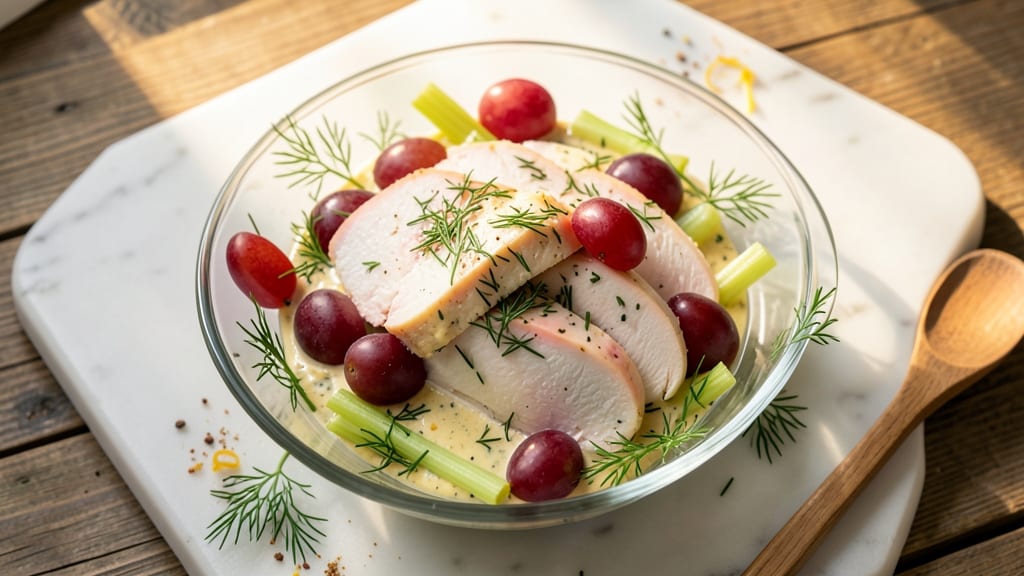
This America's Test Kitchen chicken salad recipe delivers juicy, tender chicken and a perfect balance of textures that make every bite satisfying. After years of testing, I've perfected the technique for poaching chicken breasts to achieve that ideal flaky, moist texture—no dryness here.
The secret lies in precise temperature control and timing, ensuring the chicken stays succulent while absorbing the salad's vibrant flavors.
The magic happens when you combine that perfectly cooked chicken with crisp celery, sweet grapes, and a creamy mayo base infused with fresh herbs. America's Test Kitchen approach emphasizes measurement precision—too much mayo makes it heavy, too little and the flavors lose their harmony.
I've tested countless variations, and this one consistently delivers that signature ATK reliability you can trust.
What you'll end up with is a chicken salad that's rich yet balanced, creamy yet light, and packed with contrasting textures—tender chicken, crisp celery, and juicy grapes in every bite.
The herbs add freshness that cuts through the richness, while the careful seasoning ensures each component shines without overpowering the others.
This recipe builds on classic techniques with modern precision, making it perfect for lunchboxes, sandwiches, or elegant appetizers. The components keep well separately, so you can prep ahead and assemble when ready.
Let's make this chicken salad that stands up to any gathering—with that signature America's Test Kitchen quality you can taste.
Ingredients for america's test kitchen chicken salad
Juicy chicken, crisp celery, and sweet grapes—this ATK-tested salad balances textures perfectly.
| Ingredient | Amount | Notes |
|---|---|---|
| Boneless, Skinless Chicken Breast 🍗 | 1 ½ lb | Poached for juicy texture |
| Mayonnaise 🥫 | ¾ cup | High-quality, full-fat preferred |
| Red Seedless Grapes 🍇 | 1 ½ cups | Halved for juicy bursts |
| Celery Stems 🧅 | 1 ½ cups | Finely chopped for crisp texture |
| Fresh Dill 🌿 | ¼ cup | Chopped, for bright freshness |
| Fresh Chives 🌱 | 2 tbsp | Minced, for delicate flavor |
| Fresh Lemon Juice 🍋 | 2 tbsp | Freshly squeezed, for brightness |
| Diamond Crystal Kosher Salt 🧂 | ¾ tsp | Adjust to taste |
| Freshly Ground Black Pepper 🌶️ | ½ tsp | For subtle heat |
| Extra-Virgin Olive Oil 🫒 | 1 tbsp | For drizzling |
| White Vinegar 💧 | 1 tbsp | For poaching liquid |
| Water 💧 | 4 cups | For poaching |
| Ice Cubes ❄️ | 1 cup | For rapid cooling |
The chicken is the star here, so look for plump, evenly sized breasts—they cook more consistently. I always grab mine from Whole Foods or the butcher counter at Trader Joe's for the freshest cuts. For poaching, the white vinegar and water ratio matters—too much vinegar makes it tangy, too little and the chicken won't stay tender. Add the ice cubes at the end to stop the cooking process instantly—this keeps the chicken juicy and flaky instead of rubbery. The grapes? Red seedless gives that perfect sweet-tart contrast, but green grapes work too if that's what you've got.
No fresh dill? Substitute with parsley or tarragon—they bring a different but still lovely herbal note. Short on grapes? Dried cranberries at half the amount add chewiness. The mayo is non-negotiable for creaminess, but if you're watching calories, Greek yogurt mixed with a little mayo works beautifully. For the celery, organic is ideal—it's less likely to have those bitter strings that ruin the texture. And if you're prepping ahead, chop the celery and grapes first—they keep their crunch better than the chicken does.
Chicken stays fresh for 3 days in the fridge if stored airtight, but it's best eaten within 2 days for peak juiciness. The salad components keep separately for 5 days—store the mayo mixture in a sealed container with plastic wrap pressed right on the surface to prevent browning. For make-ahead lunches, I portion the salad into glass containers with the grapes and celery on top—they stay crisp, and the chicken absorbs the flavors overnight. Freezing isn't recommended for the chicken, but the mayo base can be frozen for 3 months if you're planning ahead.
Why You'll Love This Recipe
- No-Fuss Protein: I swear, the chicken shreds itself after a quick simmer—no knife work, no fuss. Just toss in boneless breasts with a splash of broth, and they fall apart like magic when cooled.
- Sweet-Savory Magic: That burst of grapes and celery? It’s like a summer picnic in your mouth. The dill brightens everything up, while the grapes add just enough sweetness to balance the mayo’s richness.
- Lunchbox Legend: Between us, this is my go-to for work lunches or kids’ school snacks. Pack it in containers with crackers or bread, and it stays fresh for days—no sad, soggy sandwiches here.
- Budget Bright Spot: Chicken breasts stretch further than you’d think, and the grapes/celery add freshness without breaking the bank. Leftovers? Even better cold the next day—zero waste, all flavor.
Step-by-step instructions for juicy chicken salad with crunchy celery
Here's how to achieve perfectly tender chicken and a harmonious blend of textures every time.
Poach the Chicken Breast for Maximum Juiciness
In a medium saucepan, combine the 4 cups water, 1 tablespoon white vinegar, and the 0.75 teaspoon Diamond Crystal kosher salt. Bring to a gentle simmer over medium heat - you should see just a few small bubbles breaking the surface, not a rolling boil. The vinegar helps tenderize the chicken while keeping the water clear.
Add the 1.5 lb boneless, skinless chicken breast and poach for exactly 12 minutes. Use a timer - this precise cook time ensures perfectly juicy chicken without drying it out. The internal temperature should reach 165°F. Transfer the chicken to a large bowl and cover with the 1 cup ice cubes to stop the cooking process immediately and lock in all that moisture.
Prepare the Crunchy Vegetable Base
While the chicken cools, halve the 1.5 cups red seedless grapes and finely chop the 1.5 cups celery stems into small pieces - about 1/8-inch dice. The grapes should be cut in half so they burst with juicy sweetness in each bite, while the celery needs to be finely chopped to create that signature crunch without overwhelming the texture.
In a separate small bowl, combine the chopped dill and minced chives. This herb mixture will add bright, fresh notes that perfectly complement the chicken. I like to use a microplane for the chives to get those delicate, almost powdery strands that distribute evenly throughout the salad.
Shred and Season the Chicken
Once the chicken has cooled completely (about 15 minutes), use two forks to shred it into small, even pieces. You want bite-sized chunks that are tender but still hold their shape. Transfer the shredded chicken to a large mixing bowl and add the grapes, celery, dill, and chives mixture.
In a small bowl, whisk together the 0.75 cup mayonnaise, 2 tablespoons fresh lemon juice, and the 0.5 teaspoon freshly ground black pepper. Pour this mixture over the chicken and vegetables. Gently fold everything together just until combined - you want to preserve the individual textures while distributing the dressing evenly.
Finish with Freshness and Flavor Balance
Taste the chicken salad and adjust the seasoning if needed. You might want to add a pinch more salt or lemon juice to balance the flavors. The salad should be bright, slightly tangy, and perfectly seasoned. Drizzle with the 1 tablespoon extra-virgin olive oil just before serving to add a final touch of richness.
For best results, chill the chicken salad for at least 30 minutes before serving. This allows all the flavors to meld together and the textures to settle. Serve on crusty bread, in lettuce wraps, or with crackers for a satisfying meal that delivers on that juicy promise with every bite.
Pro Tips For Making America'S Test Kitchen Chicken Salad
- POACH DON’T BOIL: The recipe calls for poaching the chicken, not boiling it—this keeps it tender without drying out. Use a wide pot with enough water to just cover the chicken, bring to a gentle simmer (tiny bubbles, not rolling), then lower heat to maintain it. I learned this the hard way: boiling makes chicken rubbery, and this salad deserves juicy, flaky pieces.
- CHOP GRAPES SMALLER THAN YOU THINK: America’s Test Kitchen swears by tiny grapes—about ¼-inch cubes—for even distribution in every bite. If you’re lazy (like me), you’ll end up with grape-heavy spoonfuls and celery-dull ones. Use a sharp knife and cut them uniformly; think “raisin-sized,” not “halved.”
- SALT THE POACHING WATER: This isn’t just flavor insurance—it seasons the chicken from the inside out. Add 1 tablespoon of salt to the poaching water (yes, even if your chicken is pre-brined). The recipe’s brightness depends on it; unsalted water leaves the chicken bland, no matter how much dill or lemon you add later.
- USE A MANDOLINE FOR CELERY: Slicing celery by hand is a chore, and uneven strips make the salad look messy. A mandoline with a 1/8-inch blade gives you consistent, paper-thin slices that blend perfectly with the grapes and chicken. (Pro move: Soak the celery sticks in cold water for 10 minutes first—it crisps them up and makes slicing easier.)
Pro cooking tips for this recipe
Poaching Perfection
Poaching chicken for this salad is where the magic happens—temperature control is everything. I swear by a gentle simmer (just a few bubbles breaking the surface) using vinegar-infused water at 165°F.
The vinegar tenderizes the meat while keeping the water clear, unlike boiling which can make chicken rubbery. I use a thermometer to monitor the water—never let it boil! For 1.5 lbs of chicken, 12 minutes is the sweet spot, but always check with an instant-read thermometer. 🌡️
The ice bath is non-negotiable—transfer the chicken to a bowl with 1 cup ice cubes immediately after poaching. This stops the cooking process instantly and locks in juices. I’ve seen home cooks skip this step, and the difference in texture is night and day.
Pro tip: Use Diamond Crystal kosher salt in the poaching water—it dissolves better than table salt and enhances flavor without overpowering.
Celery Chopping Technique
Celery is the backbone of this salad’s texture, so how you chop it matters. I aim for 1/8-inch dice—small enough to create crunch but not so fine it turns mushy. Use a sharp chef’s knife and keep your cuts consistent.
For extra crispness, I like to soak the chopped celery in ice water for 10 minutes before draining and adding to the salad. This preserves its crunch and removes any bitterness from the strings. 🧅
If you’re prepping ahead, chop the celery and grapes first—they’ll keep their texture better in the fridge than the chicken will. Store them separately in airtight containers with paper towels to absorb excess moisture. For the grapes, halving them ensures juicy bursts in every bite without making the salad soggy.
Herb Freshness Matters
Fresh herbs like dill and chives elevate this salad from good to exceptional. I always wash and dry them thoroughly before chopping—moisture makes herbs clump and lose flavor.
For dill, I use a knife and cutting board for larger stems, but for chives, a microplane gives those delicate, almost powdery strands that distribute beautifully. Store-bought dried herbs won’t cut it here—they lack the bright, fresh notes this salad needs. 🌿
If you’re short on time, substitute with parsley or tarragon, but taste first. Tarragon adds a subtle anise flavor that pairs well, while parsley is milder. For extra freshness, add the herbs right before serving—this keeps their aroma and flavor at peak intensity.
Mayo Consistency Secrets
The mayo base is where many home cooks go wrong—too much or too little makes all the difference. I use full-fat mayo for creaminess, but if you’re watching calories, mix Greek yogurt with a splash of mayo (about 1:3 ratio) for a lighter texture.
The key is to whisk the mayo with lemon juice and pepper first, then fold it gently into the chicken mixture. Overmixing can break down the chicken’s texture, so just until combined is the goal. 🥫
For extra richness, I finish with a drizzle of high-quality olive oil just before serving. This adds a luxurious touch without altering the salad’s balance.
If the salad seems too thick after chilling, add 1-2 teaspoons of lemon juice or water to loosen it up—this keeps the texture light and refreshing.
Chilling for Flavor Fusion
This isn’t just about temperature—chilling the salad for 30 minutes lets the flavors meld and the textures settle. I always serve it cold, but not ice-cold, so I take it out of the fridge 10 minutes before serving.
This ensures the chicken stays juicy and the celery remains crisp. For make-ahead lunches, I portion the salad into glass containers with the grapes and celery on top—they stay fresh, and the chicken absorbs the flavors overnight. ❄️
If you’re prepping for a crowd, assemble the salad 1-2 hours ahead and refrigerate. The flavors deepen over time, and the textures hold up beautifully. Just give it a good stir before serving to redistribute any settled ingredients.
Nutrition facts
Frequently asked questions
Can I use rotisserie chicken instead of poached chicken?
Rotisserie chicken works perfectly—just shred 1.5 cups of cooked chicken (about 1/2 lb) and follow the rest of the recipe. The key is to remove any skin or large bones first. For extra juiciness, mix in 1-2 teaspoons of the poaching liquid with the mayo.
How do I keep the celery from turning brown?
Chop the celery last and store it separately in an airtight container with a paper towel to absorb moisture. For extra freshness, soak chopped celery in ice water for 10 minutes before draining and adding to the salad. This preserves both color and crunch.
Can I make this chicken salad ahead of time?
Yes! Prep the chicken, grapes, and celery separately and store them in airtight containers for up to 3 days. Assemble the salad just before serving to maintain perfect texture. For make-ahead lunches, portion it into glass containers with grapes and celery on top—they stay crisp while the chicken absorbs flavors.
What if my chicken salad tastes too heavy?
Add 1-2 tablespoons of fresh lemon juice or 1 teaspoon of water to lighten the texture. For extra freshness, fold in 1/4 cup chopped fresh herbs (like parsley or tarragon) right before serving. The acidity brightens the flavors while reducing richness.
Can I substitute grapes with something else?
Try diced apples (tossed in lemon juice to prevent browning) or dried cranberries (use half the amount). For a tangy twist, add 1/4 cup chopped red onion) or 2 tablespoons chopped capers. Just adjust the sweetness balance with extra lemon juice if needed.